Additionally, EBITDA margin does not account for interest expenses, which can be a significant drain on a company’s cash flow, particularly if it is highly leveraged. This means that a company with a high EBITDA margin may still struggle to meet its debt obligations if its interest expenses are substantial. To understand a company’s cash position, review the statement of cash flows. Depreciation expenses recognise the decline in value of capital expenditures, including vehicles, machinery, and equipment. Amortisation expenses record when intangible assets produce revenue.

Limitations of EBITDA Margin
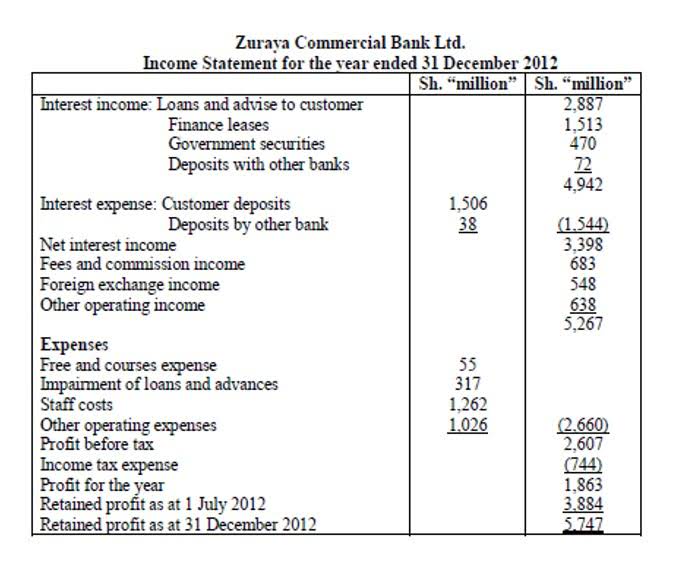
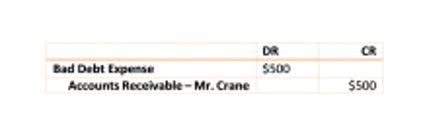
In these financials, the depreciation and amortization expense appear as a separate line item on the face of the income statement, and we identified it. For example, Bob received a $50,000 order to a company that subsequently went out unearned revenue of business. Bob subsequently wrote-off $50,000 of uncollectible receivable as bad debt expense in his 2020 profit and loss statement presented above.

Q3. What is adjusted EBITDA?
They finish the product and deliver it in early March for $4,200. Premier’s EBITDA margin is $56,200 divided by $520,000 revenue, or 10.8%, so Premier earns nearly 11¢ for every dollar of revenue. It empowers retail investors to identify investment opportunity with all the necessary data and analytics. Therefore, it is recommended that you work with trusted financial advisors and M&A specialists to ensure you do not overreach in pursuit of the largest EBITDA number possible. As such, EBITDA does not fall under Generally Accepted Accounting Principles (GAAP), which means companies can interpret the formula and its components in different ways. This flexibility can help them hide red flags that prospective buyers could later pick up during due diligence.
- The problem that emerges, however, is determining which items qualify as an adjustment and which criteria to apply.
- EBITDA is an acronym for Earnings Before Interest, Taxes, Depreciation, and Amortization.
- In its simplest definition, EBITDA is a measure of a company’s financial performance, acting as an alternative to other metrics like revenue, earnings or net income.
- Companies calculate EBITDA to know how much net income is generated after operating expenses, but before non-operating expenses and non-cash charges.
- The ebitda to revenue ratio helps understand a company’s financial health.
Unlocking Growth Potential: The Hadley Independent Sponsor Alliance (HISA)
In our guide, we’ve looked into EBITDA margin calculation and its role in finance. A full view of a company’s finances gives the best picture of its health. Get instant access to video lessons taught by experienced investment bankers. Learn financial statement modeling, DCF, M&A, LBO, Comps and Excel shortcuts. Suppose we’re tasked with calculating and comparing the EBITDA margin what is ebitda of three different companies. The EBITDA margin provides a picture of how efficiently a company’s revenue is converted into EBITDA.
EBIT, or earnings before interest and taxes, is similar to EBITDA and calculates a company’s profitability. However, while EBIT excludes the effects of financing and tax strategies, it still includes noncash expenses like depreciation and amortization, which EBITDA doesn’t. Working capital is the difference Accounting Errors between a company’s current assets and current liabilities. It represents the amount of cash and liquid assets that a company needs to run its day-to-day operations.
Comparing Companies Across Industries
- See your business cash flow trends and balance forecasting — any time, anywhere — with Nav’s Cash Flow Health.
- Let’s delve into the advantages and limitations of EBITDA Margin to understand how to leverage it effectively.
- One key advantage of EBITDA margin is its ability to provide a picture of a company’s operational health that is not distorted by influences such as debt or asset depreciation.
- In the realm of digital marketing, the pursuit of effective strategies for business growth is…
This might indicate that Company A operates more efficiently than Company B. Therefore, the corporation in question may see more potential in Company A and investigate its finances further. Let’s break down EBITDA further to learn what the calculation includes. Keep reading to learn more about how EBITDA works, why it matters and its limitations. Many people are unaware of the impact credit inquiries have on their credit score. Since we have the two required inputs—adjusted EBITDA and revenue—we can enter them into our formula from earlier to arrive at an adjusted EBITDA margin of 9.5%.

The idea is to account for the fact that companies don’t carry the same debt loads and pay different interest rates depending on location and other factors. Entrepreneurs and business valuators often use EBITDA to calculate a company’s valuation for purposes of a business sale or acquisition. A common valuation method is to apply a multiple to EBITDA to determine how much the business is worth. The specific multiple can vary depending on many factors, such as market conditions, industry and location. EBITDA is calculated with the following formula, using elements found in the income statement. Knowing how to calculate it will give valuable insights into your current operational efficiency.